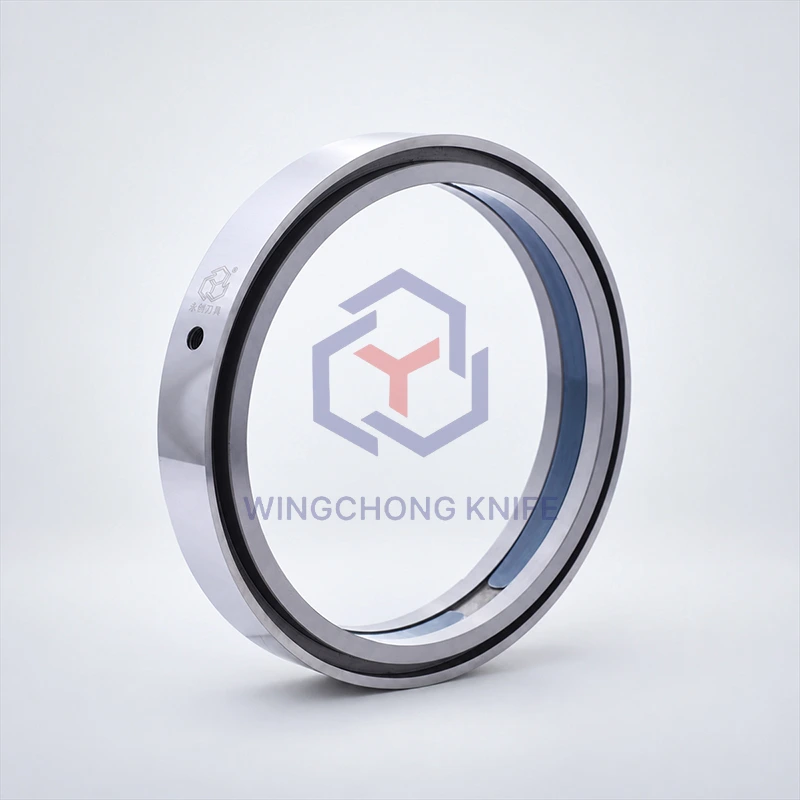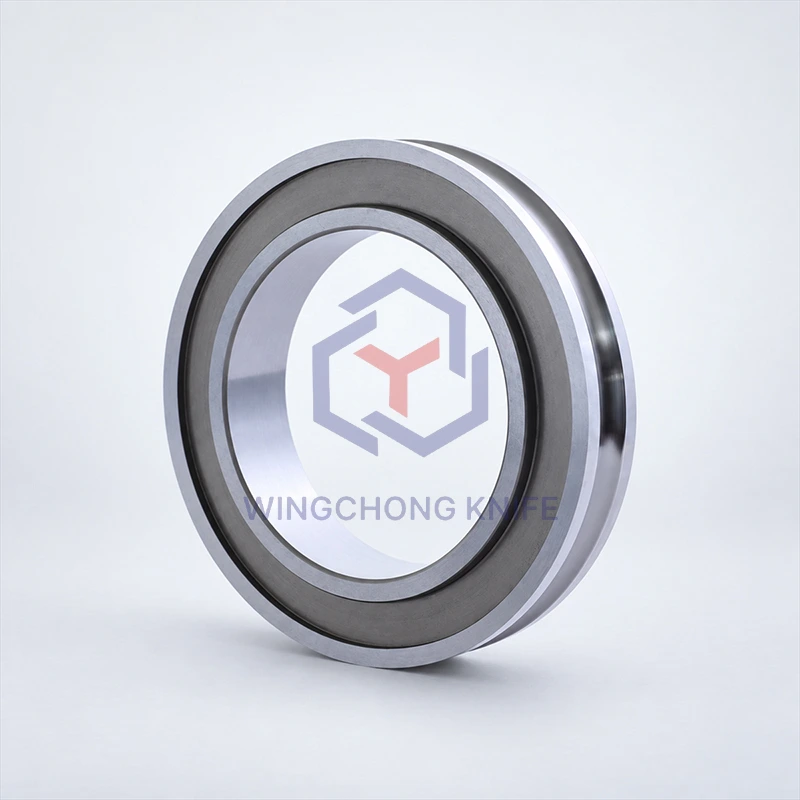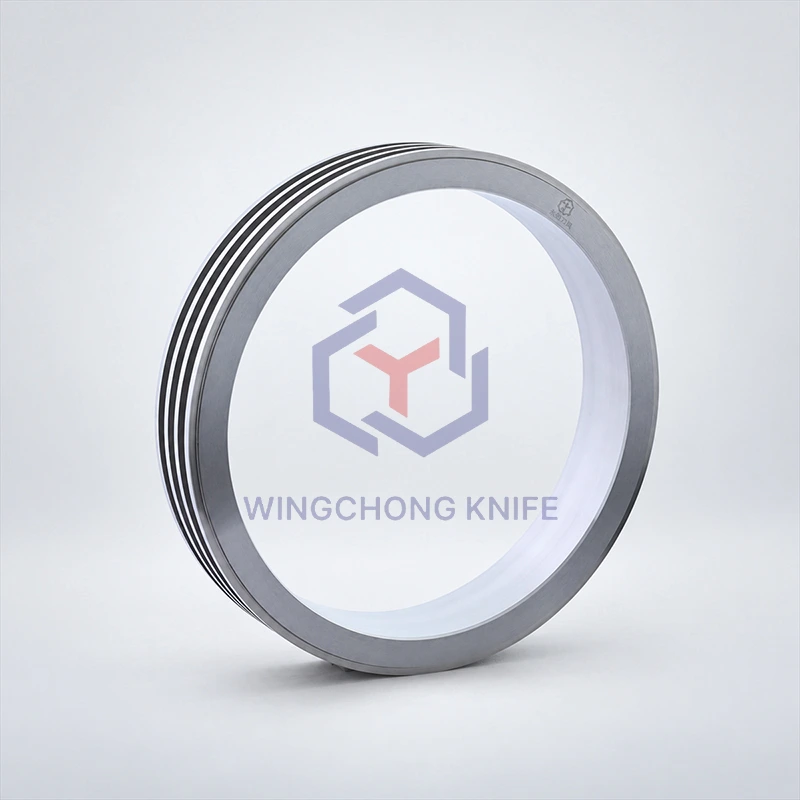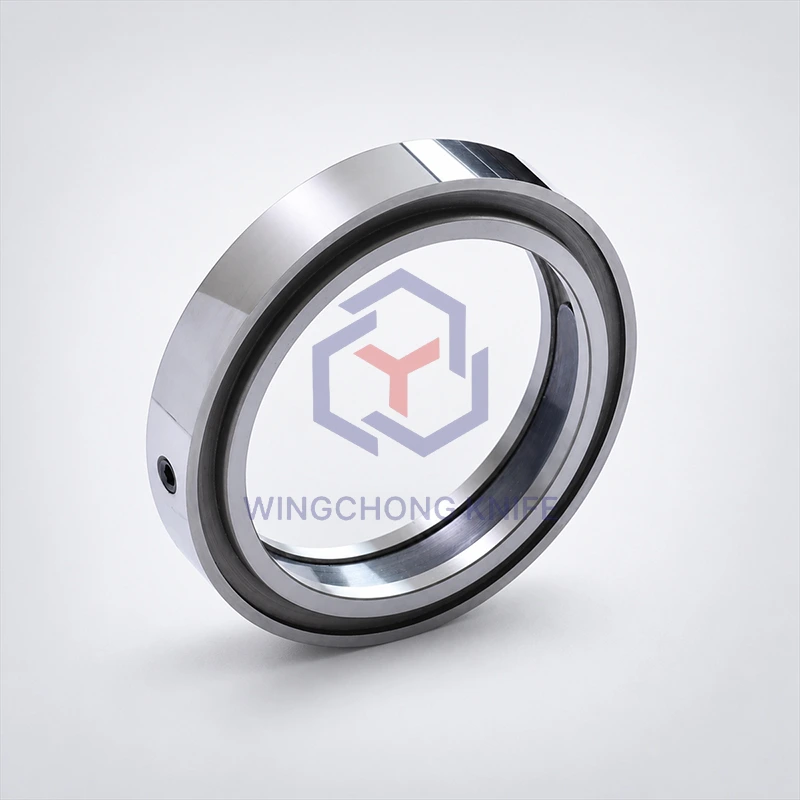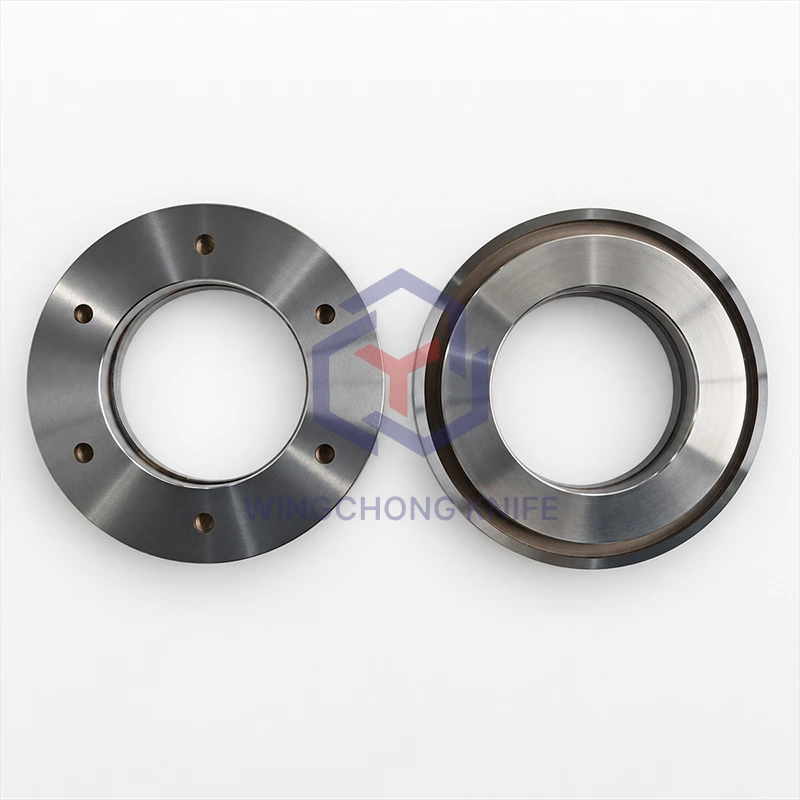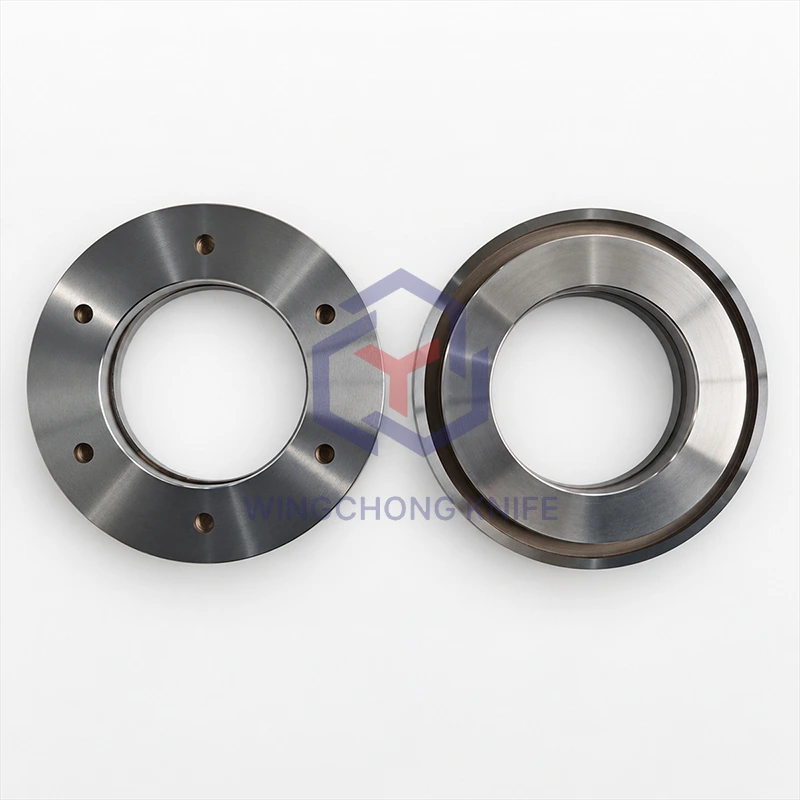

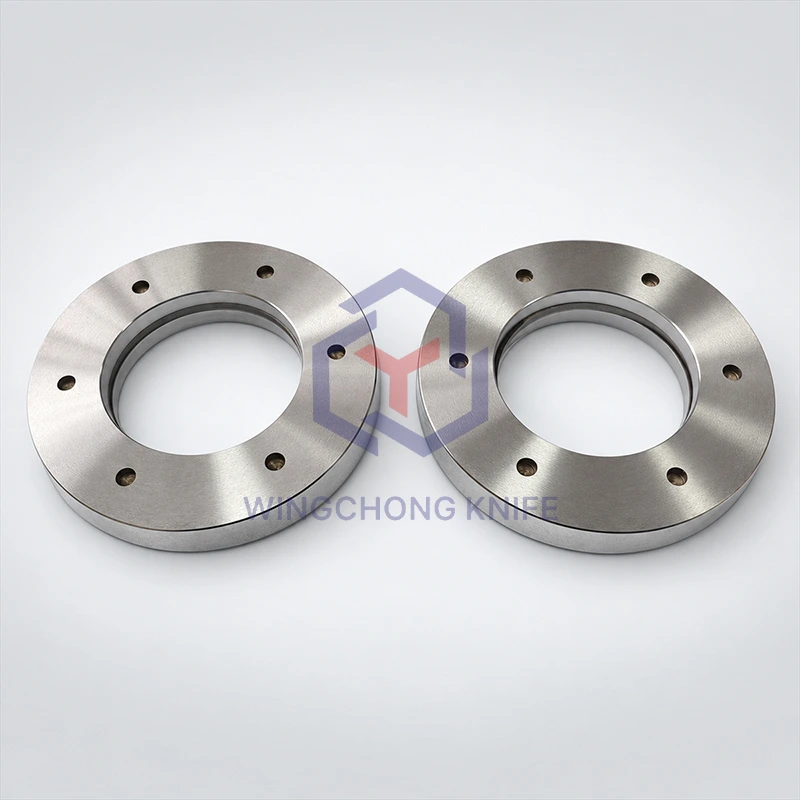
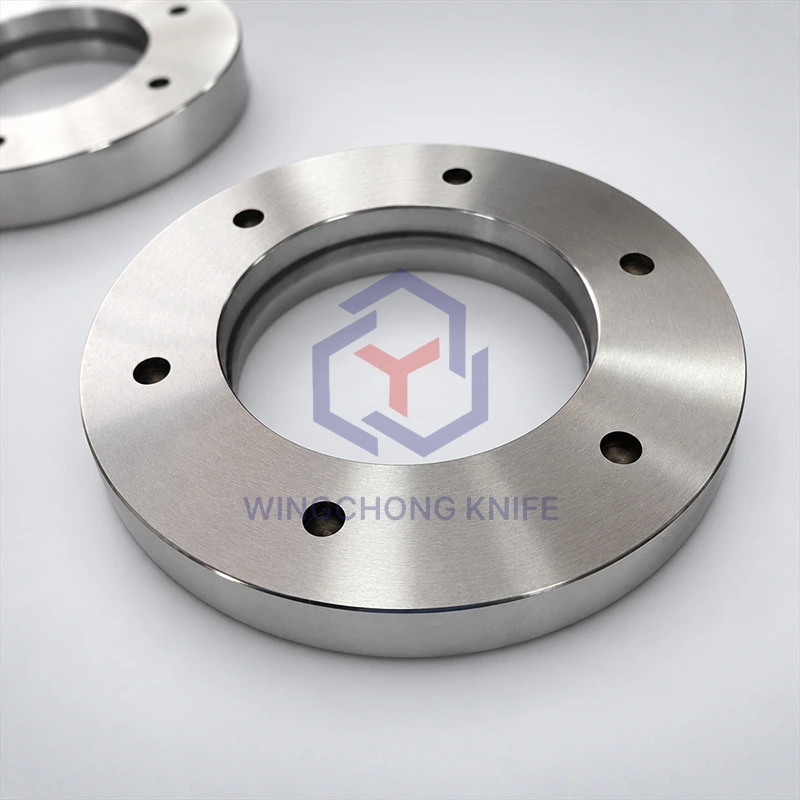
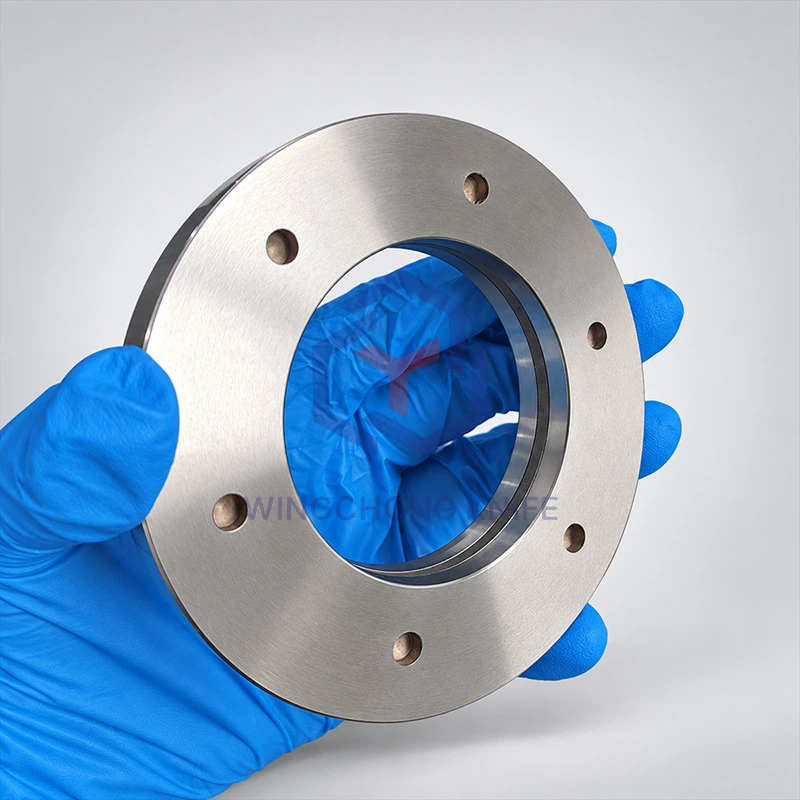

Self Locking Bottom Knives are designed for efficient knife positioning and quick slit-width adjustment in shear slitting systems. A hardened eccentric locking ring secures the knife to the shaft and allows convenient locking, unlocking, and repositioning.
The eccentric locking ring can be rotated to securely position the knife on the shaft. Correct locking direction during installation helps enable quick unlocking and subsequent adjustment, making these knives suitable for applications requiring frequent slit-width changes.
Self Locking Bottom Knives are suitable for precision slitting of plastic films, metal films, adhesive tapes, labels, tissue, textiles, paper, paperboard, rubber, laminates, and nonwoven materials.
Installed on the bottom knife shaft, these knives work with upper dished knives, pneumatic knife holders, and knife holders to form a reliable shear slitting system. WINGCHONG KNIFE can also manufacture matching knife components for precise system compatibility.
Self-locking design with hardened eccentric locking ring
Quick and convenient knife positioning
Efficient slit-width adjustment
Secure locking on the bottom knife shaft
Suitable for applications requiring frequent adjustments
Designed for shear slitting systems
Custom dimensions and specifications available
Self Locking Bottom Knives are suitable for:
Plastic films
Metal films and foils
Adhesive tapes and materials
Labels
Tissue
Textiles
Paper and paperboard
Rubber
Flexible laminates
Nonwoven materials
Other specialty web materials
As a custom slitter knife manufacturer, WINGCHONG KNIFE can manufacture Self Locking Bottom Knives according to your shaft dimensions, machine configuration, slit widths, and application requirements.
Customization options include:
| Outer Diameter | Inner Diameter | Thickness |
| 60 / 80 / 90 | 105 | 10 |
| 130 | 90/100 | 10 |
| 150 | 120 | 10/15/20 |
| 180 | 150 | 10/15/20 |
| 200 | 138 / 144 / 150 | 20/30 |
| 240 | 140 / 188 | 20/30 |
| 250 | 140 / 188 | 20/30 |
| 300 | 250 | 20/30 |
| Material: 1.2379、chrome-alloyed (1.5 % Cr), high-chrome-alloyed tool steels (12 % Cr) | ||
● Knife diameter and thickness
● Bore and mounting dimensions
● Eccentric locking ring configuration
● Cutting edge geometry
● Knife material and hardness
● Surface finish
● Dimensional and geometric tolerances
Production can be based on your technical drawings, existing knife samples, shaft specifications, or machine requirements.

Self Locking Bottom Knives are commonly used with:
● Slitting machines
● Slitter rewinders
● Shear slitting systems
● Bottom knife shafts
● Dished knives
● Pneumatic knife holders
● Mechanical knife holders
● Converting equipment
The knife dimensions and locking configuration can be customized to match your existing shaft and upper knife assembly.

Self Locking Bottom Knives are widely used in:
● Flexible packaging converting
● Film and foil slitting
● Label converting
● Adhesive tape processing
● Paper and tissue converting
● Nonwoven processing
● Textile slitting
● Rubber processing
● Narrow-web converting
● Continuous web processing
Custom Manufacturer — Manufactured according to drawings, samples, and machine requirements.
Self-Locking Design — Hardened eccentric locking rings provide secure knife positioning.
Quick Adjustment — Designed for efficient slit-width changes and knife repositioning.
Precision Manufacturing — Controlled dimensions and cutting geometry for reliable slitting.
Complete System Matching — Matching dished knives and knife holders can be manufactured in-house.
B2B Custom Production — Suitable for OEM, replacement, and customized slitting applications.
Abrasive Cutting Knives are industrial cutting tools specifically designed for cutting abrasive rolls such as sandpaper and abrasive cloth.
Dished knives are circular cutting tools used for shear-type slitting. Unlike completely flat “flat knives,” their blades feature a concave geometric shape (resembling a plate or dish), a design that enables them to generate specific lateral cutting forces during rotational shearing.
Adhesive materials: Self-adhesive labels, adhesive tape, various composite films (die-cutting can create a temporary seal along the cut edges).
Elastic/soft materials: Rubber, non-woven fabric (NWF), textiles, tissue paper.
Abrasive/hard materials: Materials such as sandpaper that can quickly wear down standard sharp blades.
Copyright © 2026 by QINGDAO WINGCHONG PRECISION MACHINERY CO.,LTD All Rights Reserved